
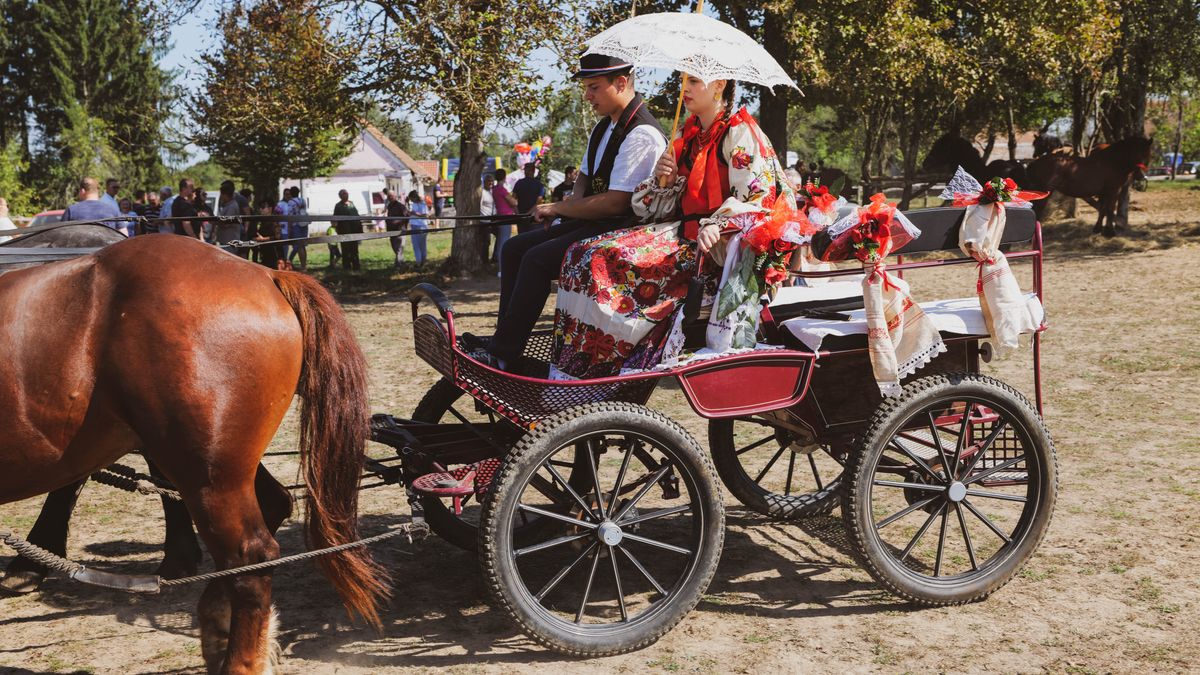
Britain's minor roads were trodden out by feet, hooves and cartwheels long before anyone thought of tarmac. That is part of their charm, and the very reason they demand respect from anyone driving a horse. A lane that feels generous in a car can become a tight, high-hedged tunnel once you are sitting behind a horse with a vehicle stretching out behind you.
If the route is new to you, drive or walk it first. Note where the surface narrows, where the hedges stand tallest, where the bends are blind, and where a gate, farm entrance or wide verge offers somewhere to pull in. Make a mental map of those refuges before you need them, because you will rarely have time to look for one with a tractor approaching.
From the front, a horse and carriage are quiet. A driver coming the other way may hear nothing at all until you are almost upon each other, and by then the gap is closing fast. Visibility is your first defence, so treat high-visibility kit as essential tack rather than an optional extra.
Fit the horse with reflective and fluorescent bands on the legs and a reflective browband or noseband. Wear a fluorescent tabard, and put reflective strips or a fluorescent sheet on the carriage itself, especially at the back where approaching traffic will see you last. Keep everything clean; a muddy tabard loses much of its brightness. In poor light or after dusk, use a white lamp facing forward and a red lamp facing rearward, and remember that a slow-moving vehicle sign on the back is a courtesy many drivers genuinely rely on.
On a particularly blind stretch, a groom walking ahead on the verge can give an early warning to oncoming traffic and a steadying presence beside the horse.
On a single-track lane, the driver who can most easily reach a passing place should take it. That is not weakness; it is good manners and good horsemanship. If a gateway or a bulge in the verge is within reach, tuck in, stop, and let the other vehicle come through. A raised hand and a nod cost nothing and do a great deal for how carriage drivers are regarded locally.
Never wave a car past on a blind bend, however politely the driver gestures. Wait until you can see the road ahead is clear, then signal clearly. Equally, avoid reversing into space you have not inspected; a carriage reverses awkwardly, and a horse is far happier going forwards. If you must give ground, turn into the gateway and let the traffic pass that way instead.
Listen as much as you look. Engine note tells you a great deal: the rising whine of a car hoping to press on, the heavy thrum of a tractor, the rattle of a trailer. Give way early rather than late, and keep your horse's head toward the traffic where possible, since most horses are steadier facing what worries them.
Signals should be exaggerated and early. Arm out and held steady for a turn, arm raised and lowered for slowing. If a driver seems unsure, say what you need out loud: "Please wait, I'm turning." Most people respond well to a clear, calm voice. It is worth remembering that many drivers simply do not realise how long a horse and carriage are, nor how little room there is on a narrow lane.
A junction met at walking pace with everything planned is a very different thing from one met at trot with a lorry appearing over the hedge.
Good lane work begins long before you leave the yard. Check every strap, buckle and stitching point each time you harness up, paying particular attention to reins, traces and the breeching that holds you back on a descent. Leather should be supple and clean, fed with saddle soap and a little oil, and brass kept bright enough to spot a cracked strap in poor light. Carry a knife, a spare rein or trace, a halter and lead rope, and a mobile phone.
Take your time, drive to the conditions, and treat every lane as a shared space rather than a contest. Doing so keeps a living tradition alive and keeps you, your horse and everyone you meet on the road safely home.

Hi, my name is Anthony kuber. I am artist and fashion designer.
I love to travel and writing blogging.
Your email address will not be published. Required fields are marked *
Software Developer & Writer
Hey, I'm Diva, a developer and writer blending code and creativity. I'm driven by a deep curiosity and a relentless pursuit of excellence. Join me as I craft digital solutions and captivating stories.


