
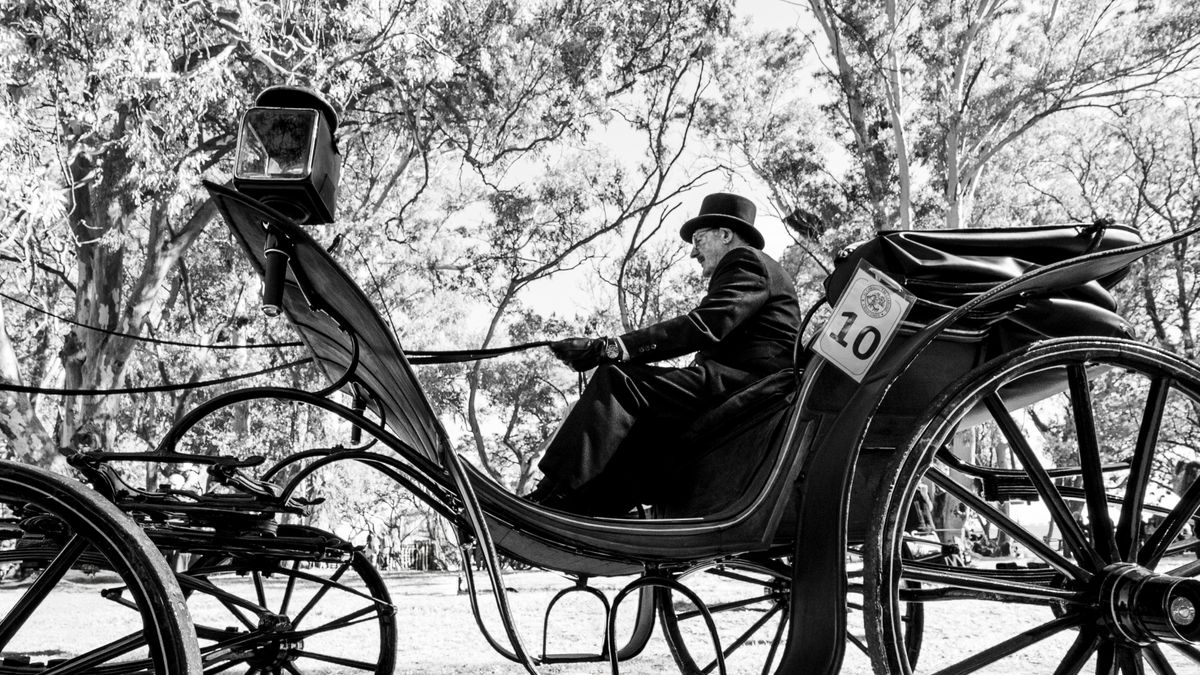
A horse-drawn carriage is a vehicle in law, and the person holding the reins is a driver with the same broad duties as anyone else on the highway. The Highway Code deals with horse-drawn vehicles alongside horse riders, and the expectation is simple: be visible, be predictable, and be in control. That starts before you leave the yard. A carriage on the public road must be roadworthy, and the checklist is not long but it is not optional.
Harness deserves particular respect, because on a carriage it is both your steering and your brakes. Check it after every outing, clean it regularly, and replace anything doubtful rather than repairing it "for now". Two people are customary on anything substantial: one driving, one acting as groom or backstepper, able to get down and take a horse's head if needed.
Off-road, remember that carriages are not generally permitted on footpaths or bridleways. Restricted byways and byways open to all traffic are the usual legal alternatives to the road.
Between sunset and sunrise, and in seriously reduced visibility such as heavy rain or fog, a carriage on the road should show a steady white lamp to the front and a steady red lamp to the rear, with reflectors to match. The duty sits with the driver rather than the horse, but the practical answer is to light both. Keep lamps clean, keep spare batteries aboard, and never rely on a single fitting.
Flashing lights belong on cycles and motor vehicles; your carriage lamps should burn steady so that other drivers read them correctly and can judge your speed and distance.
Compulsory third-party motor insurance applies to motor vehicles, and a carriage is not a motor vehicle, so the legal compulsion that falls on a car driver does not fall on you in the same way. That is not a reason to drive uninsured. Picture a spooked horse, a damaged wing mirror and a shaken driver: the bills and the arguments arrive either way. Third-party cover for carriage driving is available through specialist equine policies and through membership of recognised driving organisations. Read the wording carefully and confirm it covers the public highway, not just private ground, shows and events.
Fit a small plate on the rear of the carriage with a contact name and telephone number. It costs very little and resolves misunderstandings on the spot. Carry a mobile phone, a headcollar and a lead rein, and let someone know your route and expected return time. If you drive commercially — weddings, tourism, passenger work — additional licensing and vehicle standards apply, and you should take specific advice before your first booking.
Motorists are advised to pass horses slowly, at under 10 mph, leaving at least 2 metres where they can. Your job is to make that easy for them. Hold a steady line, keep well to the left, and signal clearly with the whip hand. On bends, hill crests and narrow lanes, consider sending a groom ahead on foot for the worst stretch.
Traffic lights ask a lot of a horse: standing still, then moving off smartly. Green means you may go, not that you must. If your horse is unsettled, wait for the next phase and let the queue behind you wait with you. On steep descents, brake early and gently and let the brake take the drag rather than the horse's hocks. On climbs, keep momentum and give yourself room. On single-track lanes, pull into passing places only where the surface is firm and the verge is not soft. If your horse becomes genuinely distressed, get out of the way if you safely can, put a groom at the head, and take the time you need.
Carriages were the original traffic on these lanes, and the hedges, gates and passing places were shaped around them. That history is worth something, but it survives on goodwill rather than sentiment. Drive as a guest in someone else's lane, keep your lamps lit and your harness sound, insure properly, thank people who slow down — and the quiet clatter of hooves and iron rims will still be welcome on British roads for another generation.

Hi, my name is Anthony kuber. I am artist and fashion designer.
I love to travel and writing blogging.
Your email address will not be published. Required fields are marked *
Software Developer & Writer
Hey, I'm Diva, a developer and writer blending code and creativity. I'm driven by a deep curiosity and a relentless pursuit of excellence. Join me as I craft digital solutions and captivating stories.


