
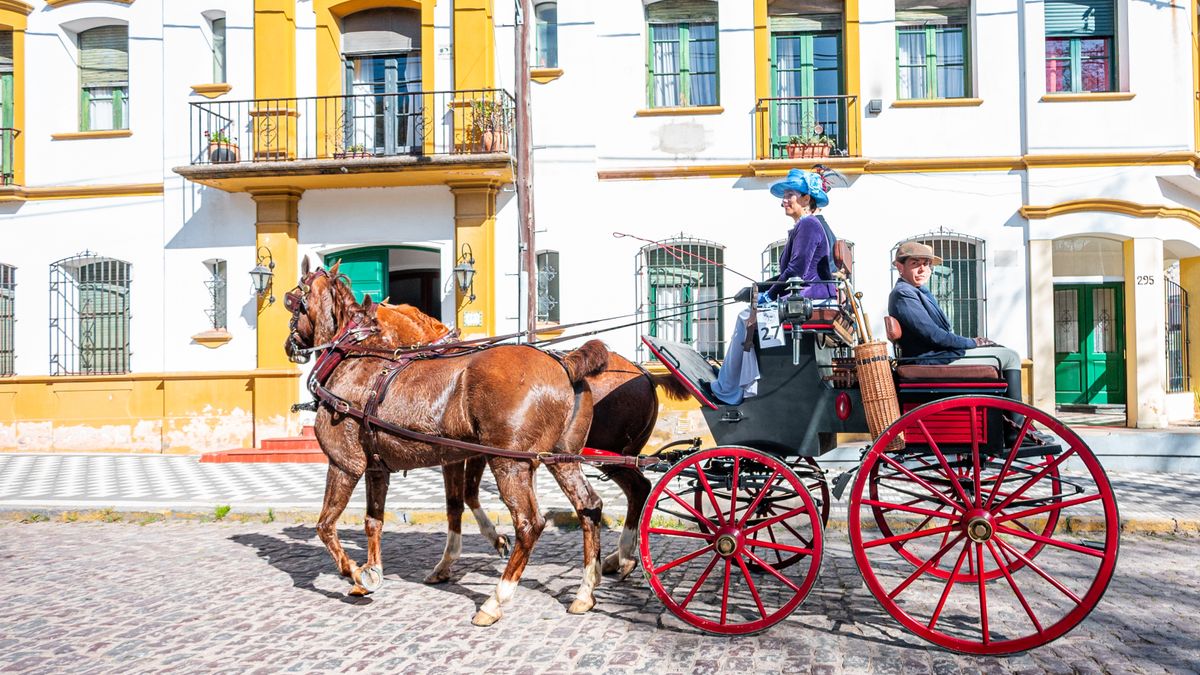
Most newcomers spend months choosing a carriage and a fortnight choosing a harness. It should be the other way round. The carriage carries you; the harness connects your horse to it, and every strap you fit is doing a job under load. A well-made, correctly fitted harness in a modest budget is far safer than a showpiece set that sits half an inch wrong. When you are starting out with a steady pony on quiet lanes and farm tracks, aim for something comfortable, adjustable, and easy for you to check on your own in a cold wind.
All three are used for everyday driving in Britain, and each has trade-offs.
Whichever you choose, spend your money on the stitching and the buckles. Look for strong, even machine stitching, roller buckles, and leather that feels firm rather than spongy.
A driving harness is not a riding bridle with extra straps. Before you buy, make sure the set includes everything your horse needs for the work you plan to do.
If a set looks cheap because breeching or a false martingale is missing, price those items in before you commit.
Fit the harness on the horse in the yard, not on the carriage, and work through each strap in order.
Then hitch up and re-check everything once the traces are under tension. Straps that seemed fine in the yard often need a hole or two of adjustment once the carriage pulls.
Leather harness wants a wipe with a damp cloth, then a proper clean and condition every few weeks and after any soaking. Pay particular attention to sweat, which is what rots stitching, around the girth, bridle and breeching. Check stitching, buckle tongues and the holes you use most often; a strap that fails at the buckle is the one that matters.
Hang your harness on a shaped rack in a dry, airy tack room, never folded in a heap or draped over a beam. Keep a spare trace, a spare buckle and a length of strap in your driving box, along with a clean cloth and a small pot of conditioner. A few minutes of care after each outing saves hours of repair later, and it keeps you familiar with every piece of the set.
Ask an experienced driver at your local club to look at the harness with you, and take your horse's measurements — girth, chest, length of back and length of trace — before you shop. Second-hand leather harness can be excellent value if the stitching is sound and no straps have stretched, so flex every piece in your hands and check for cracks along the bends and around the buckle holes. If the set is cheap enough to be suspicious, walk away; the repair bill after a broken trace on a country lane is not worth the saving. Buy once, fit it carefully, and your first harness can carry you comfortably through years of quiet lanes and green fields.

Hi, my name is Anthony kuber. I am artist and fashion designer.
I love to travel and writing blogging.
Your email address will not be published. Required fields are marked *
Software Developer & Writer
Hey, I'm Diva, a developer and writer blending code and creativity. I'm driven by a deep curiosity and a relentless pursuit of excellence. Join me as I craft digital solutions and captivating stories.


